
A curious velomobile from Russia surfaced a few days ago on the German classifieds site Kleinanzeigen.de, a platform well-known for its good selection of second-hand recumbent bikes, trikes, and velomobiles. The listing immediately caught the community attention, so we dug a little deeper into its backstory.
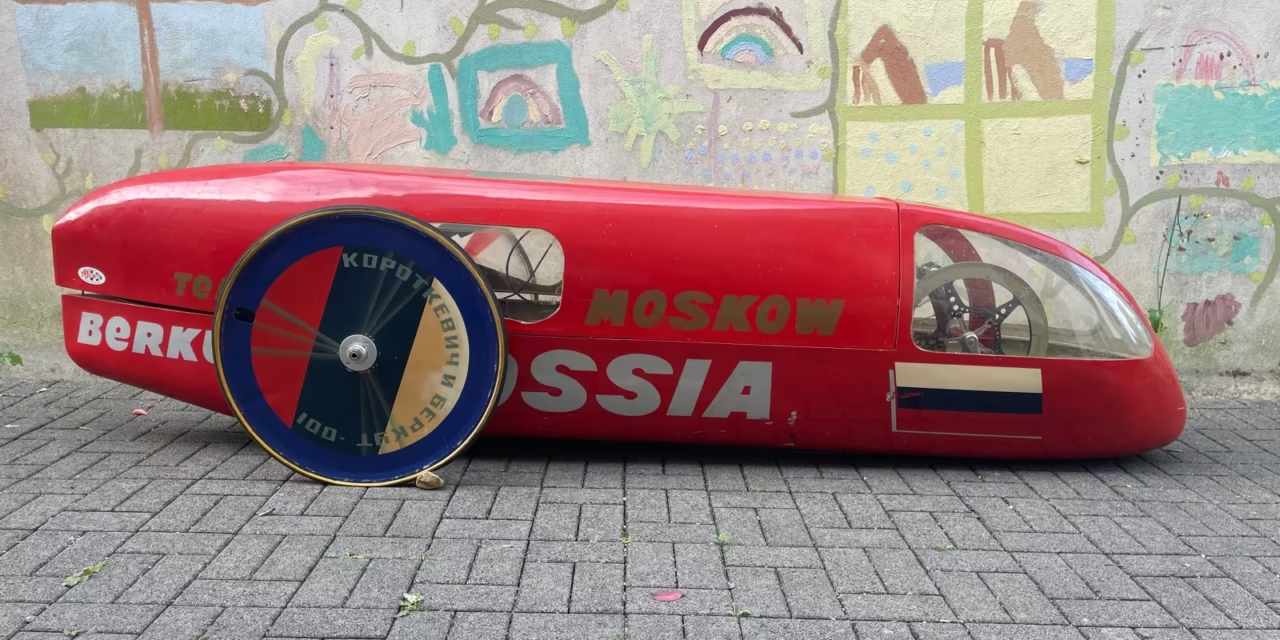
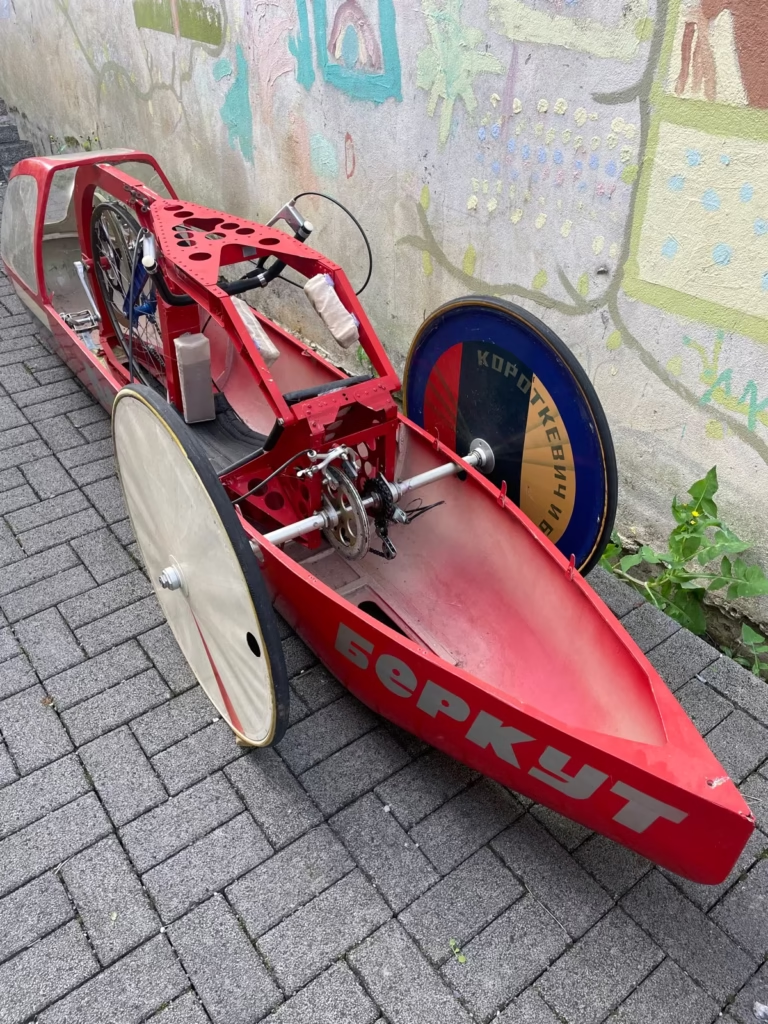
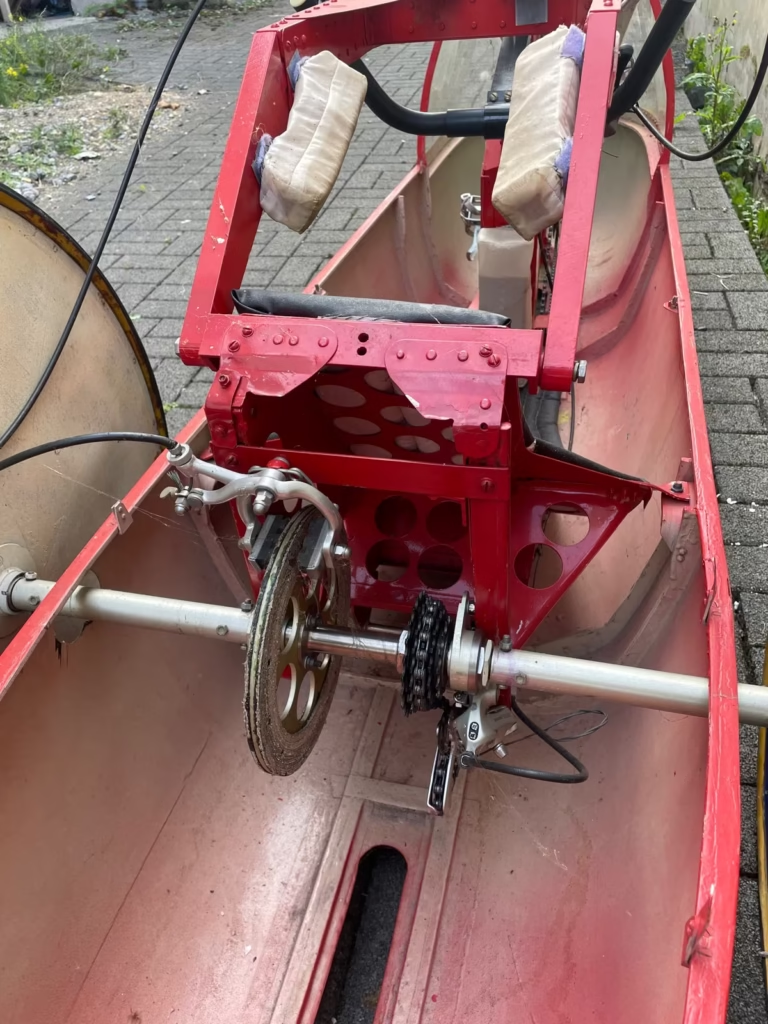
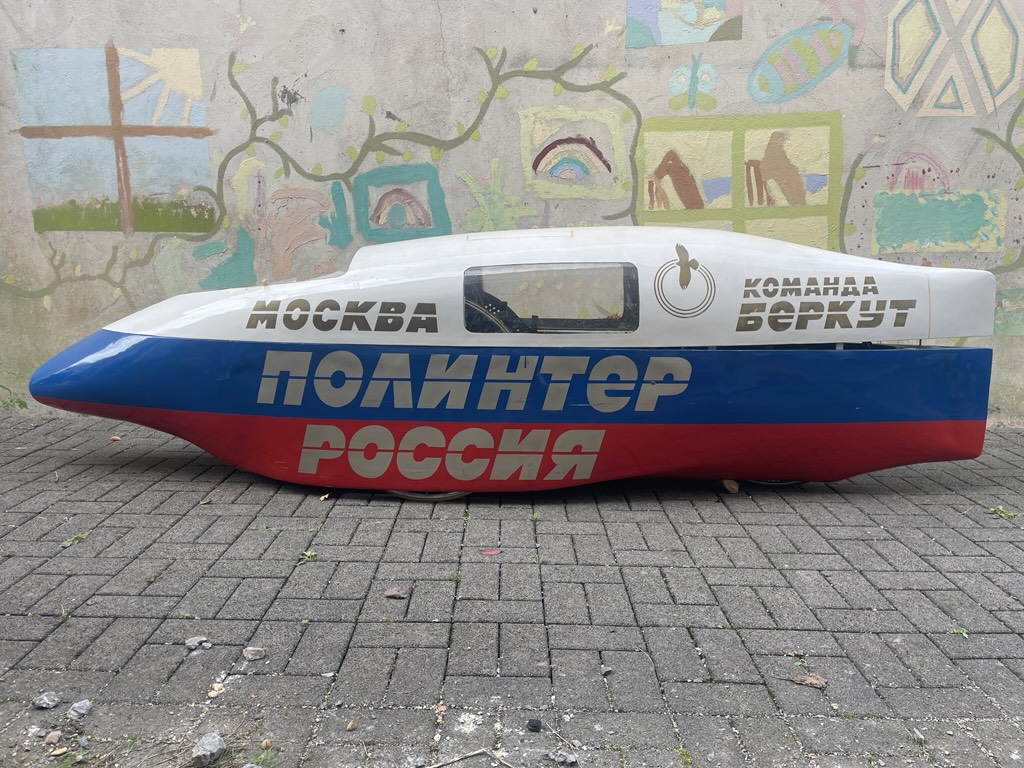
The seller describes the machine as a 1989 racing velomobile—specifically the Scorpion-Berkut B200—developed by an aerospace engineer and kept in original condition. The ad highlights a fiberglass aerodynamic shell, a five-speed Shimano 105 drivetrain, Sachs-Huret shifters, a massive 132-tooth chainring, front-wheel steering, a duplex rim brake up front, and disc brakes on the rear wheels. The velomobile measures 300 cm / 9’10” in length, 50 cm / 20″ in width, 70 cm / 28″ in height, with an 80 cm / 31″ track width, a 27.5″ front wheel and 26″ rear wheels.
The performance claims listed are impressive at first glance: a vice-world-championship sprint placement in Poland in 1989 with a 200-meter time of 12.14 seconds—roughly 60 km/h / 37 mph—behind Germany’s Vector team, plus several Soviet and European championship results through the early 1990s.
However, discussions on the German velomobilforum.de suggest the information in the listing doesn’t line up perfectly. The racing results most likely refer to several different velomobiles produced under the Berkut name and connected to the sports club Berkut Sports. The website of Berkut, a Moscow-based builder of recumbent trikes and velomobiles active during the 1990s and early 2000s, has long since vanished, but portions can still be found in web archives. There, the Scorpion model is described as a trike with possible fairing for racing, not as this one red vehicle.
Additional details about Berkut’s racing activities can still be found on the website of the affiliated sports club, which remains online. According to those archived materials, this red velomobile was built in 1994 under the name B-200. Harry Schönrock , the current owner describes that it was offered for sale in 1995 after an international competition in Basel at the IFMA bicycle fair in Cologne, where he was able to purchase it. He has then displayed it in his European Museum of Historic Bicycles in Düsseldorf. He is now selling part of his collection, which is how this rare machine has resurfaced.
Despite its racing heritage, this velomobile is not a practical choice for everyday riding—and it likely wouldn’t compete with modern racing velomobiles either. Today’s designs benefit from far more advanced aerodynamics, including fully enclosed rear wheels. On this machine, the exposed rear wheels create significant turbulence and drag at higher speeds. And although Berkut’s archived photos consistently show the vehicle as a trike, a long longitudinal cutout in the bodywork behind the rear wheels hints that the original intention may have been to build a two-wheeled streamliner instead.
During a conversation with Harry, he has sent me photos of the older B-11 racing velomobile as well and mentioned that he owns it too. It was built in 1991 already, holds probably more of the prizes and is much better looking piece that is way more refined.
Although anything associated with Russia is more than controversial today, this rare racing experiment with a taste of the Soviet era, with influences from aviation, a controversial history, and museum origins, still offers a fascinating insight into a chapter in the development of recumbent bicycles that has almost disappeared from modern narratives.
Visit the listing of the B-200 velomobile at Kleinainzeingen.de
More photos of the Berkut B-11 from 1991 and the B-200 from 1994 that is for sale are available for our Premium Members only.
PREMIUM CONTENT
If you want to read the full article, you have to be a Premium Member.
⭐️ Become a Premium Member for just 10 USD a year! ⭐️
Are you Premium Member? Just Log-in!