
From the very beginning of my long cycling expeditions, I have been an enthusiast of bike cargo trailers. One of the main reasons is that my first long trips were on a tandem, and pack two people on one bike—especially if you have a very limited travel budget—is almost impossible. After trying many different versions over the years, I had the chance in the last two years to use trailers made by the German company Aidoo, the same brand used by Matt “JaYoe” Galat and the adventurer par excellence Nicola Chiacchio. And Aidoo really are the Rolls-Royce among bike cargo trailers.
Why a Cargo Trailer Makes Recumbent Touring Easier
Using a trailer gives you better access to all your things, more space, and a much clearer overview of what you’ve packed. Your bike doesn’t need to be loaded as heavily, which makes handling easier. At the same time, trailers can usually be loaded with more weight, and especially if you are near the weight limit of your bike, a trailer allows you to carry significantly more cargo. Whether you ride a recumbent bike or trike, or a classic upright bike, it’s important to check whether the bike manufacturer has any limitations for trailer use, attachment type, or weight. Aidoo also provides information about which manufacturers allow higher trailer weights when the trailer is equipped with brakes, which is one of the options Aidoo offers.
I’ve used trailers on my trips mainly because I simply couldn’t pack all my gear onto the bike itself. Sometimes the reason was the tandem setup mentioned above, sometimes the need for quick access to my camera and camcorder, which on a recumbent prevented me from using the top surface of the rack for additional luggage. Other times, solar panels were mounted on the trailer. In recent years, the reason has been that we started traveling with our children, who can carry only a little, plus a puppy joined the family—and we like to take it with us as well.
From DIY Trailer to Aidoo
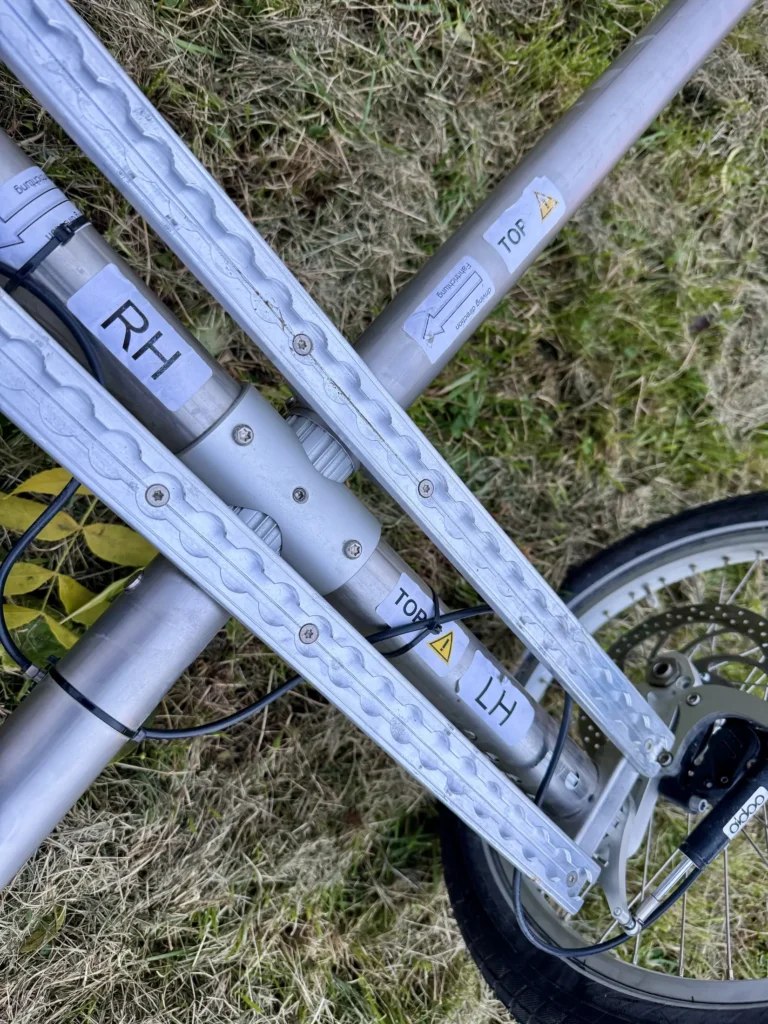
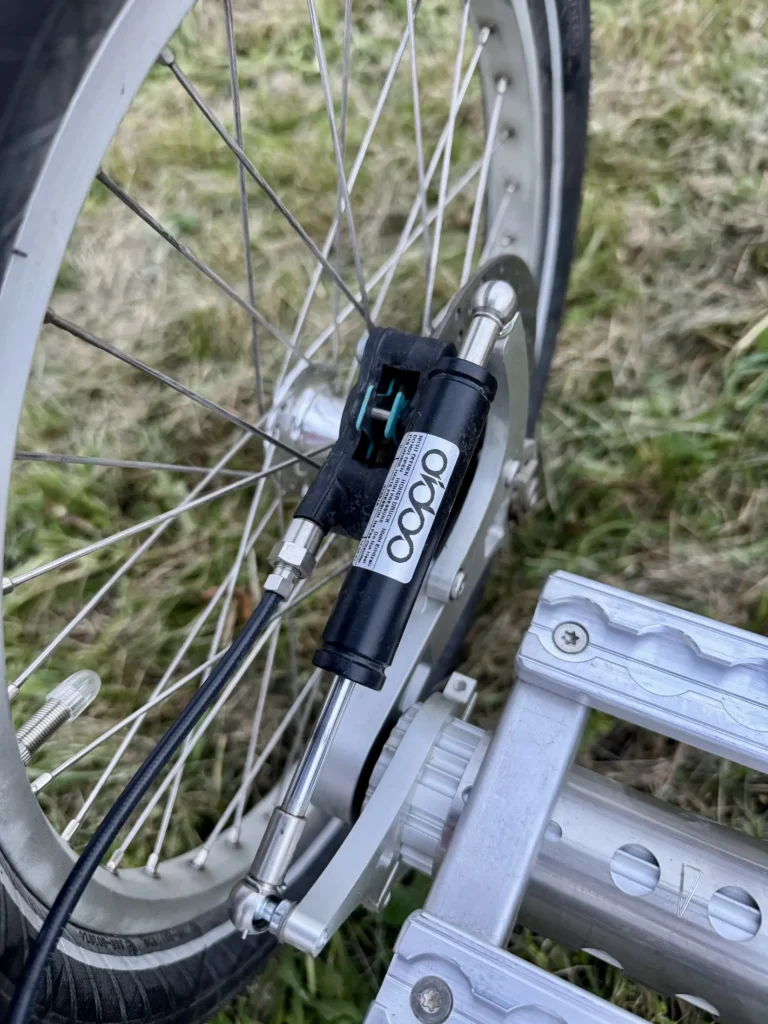
That’s why in 2023, I built a two-wheel< trailer from leftover parts I found at AZUB and mounted an aluminum box on it. The trailer worked quite well, and we liked it also because it served as a table or a flat, stable surface for putting things down. A year later, however, I had the opportunity to use a cargo trailer from Aidoo. Basically, it had the same two-wheel and aluminum box layout, but with several major improvements. These included, above all, suspension and a set of disc brakes, as well as a neat flag mount and airline rails on the lid, which significantly expand the options for attaching cargo that doesn’t necessarily have to be inside the box.
And it was great. The suspension made the biggest difference. Non-suspended trailers bounce on bigger bumps, tug on the bike, and stress the rear fork much more—especially if the bike itself has suspension—and overall you have to pay more attention to your line and to whether the bumps are too big. It’s not something that would stop me from using a trailer, but the suspension made the ride way more comfortable. I basically stopped paying attention to the line of the trailer’s two wheels and focused only on the line of my bike’s single track. Especially off-road, it was simply fantastic.
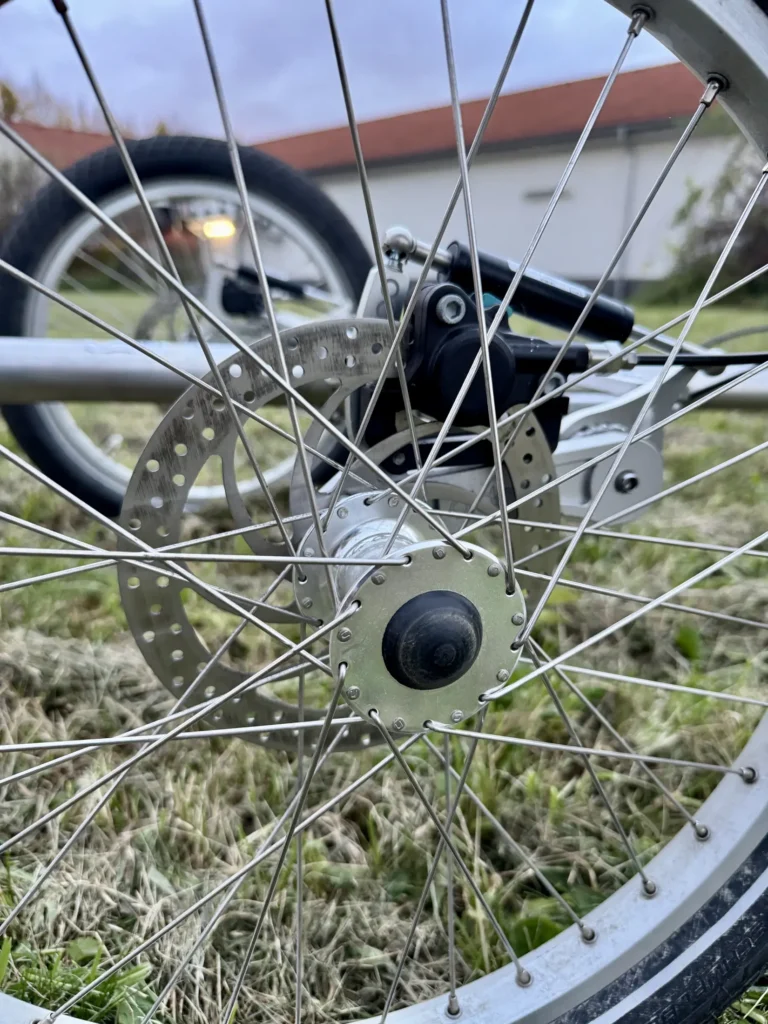
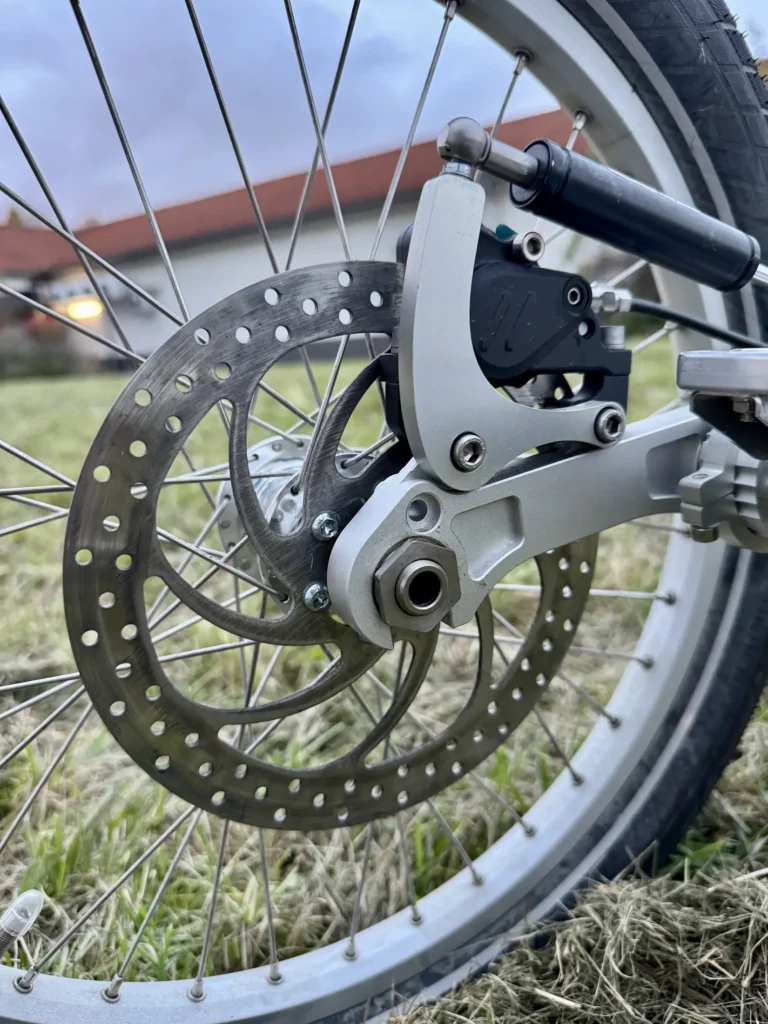
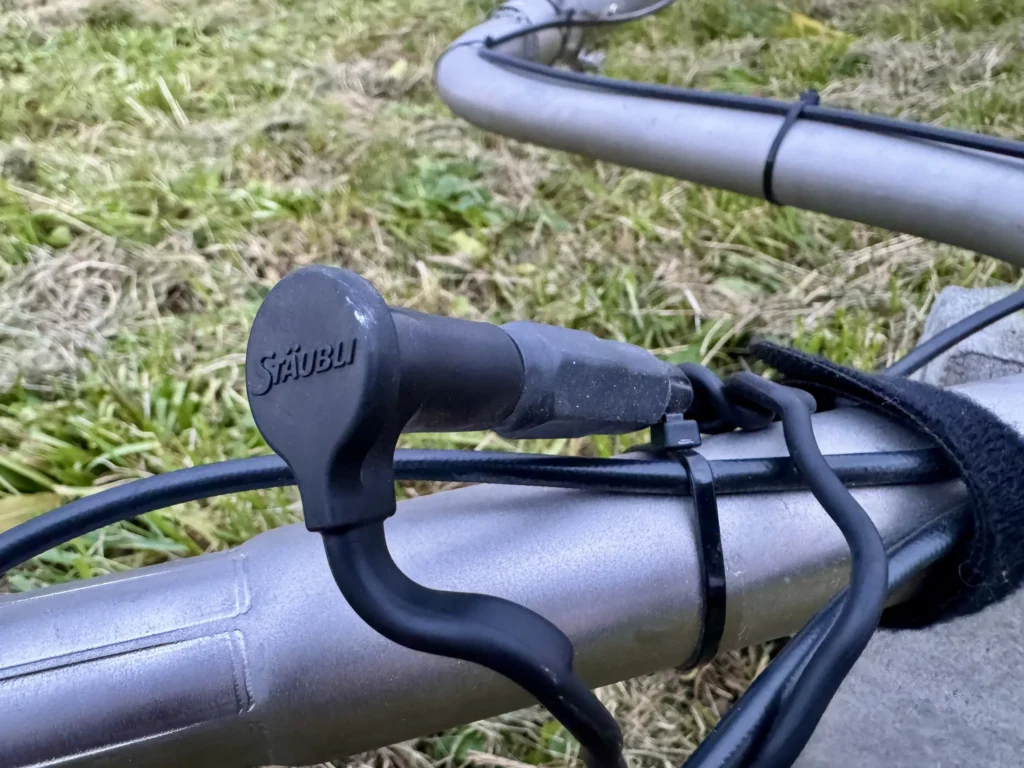
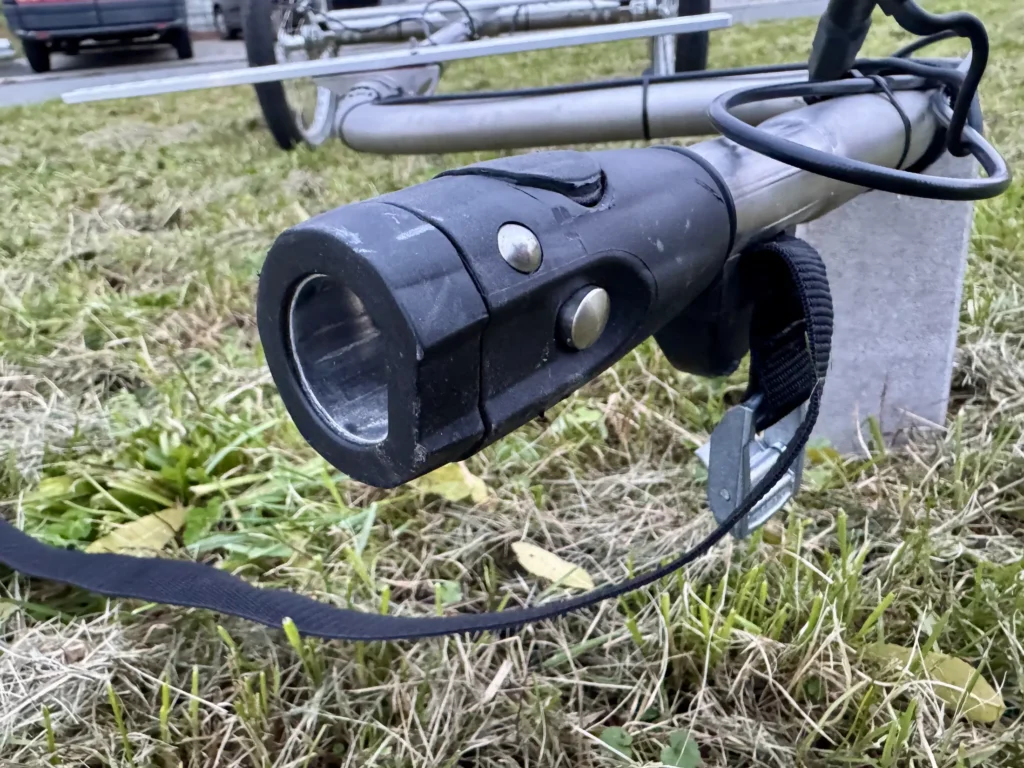
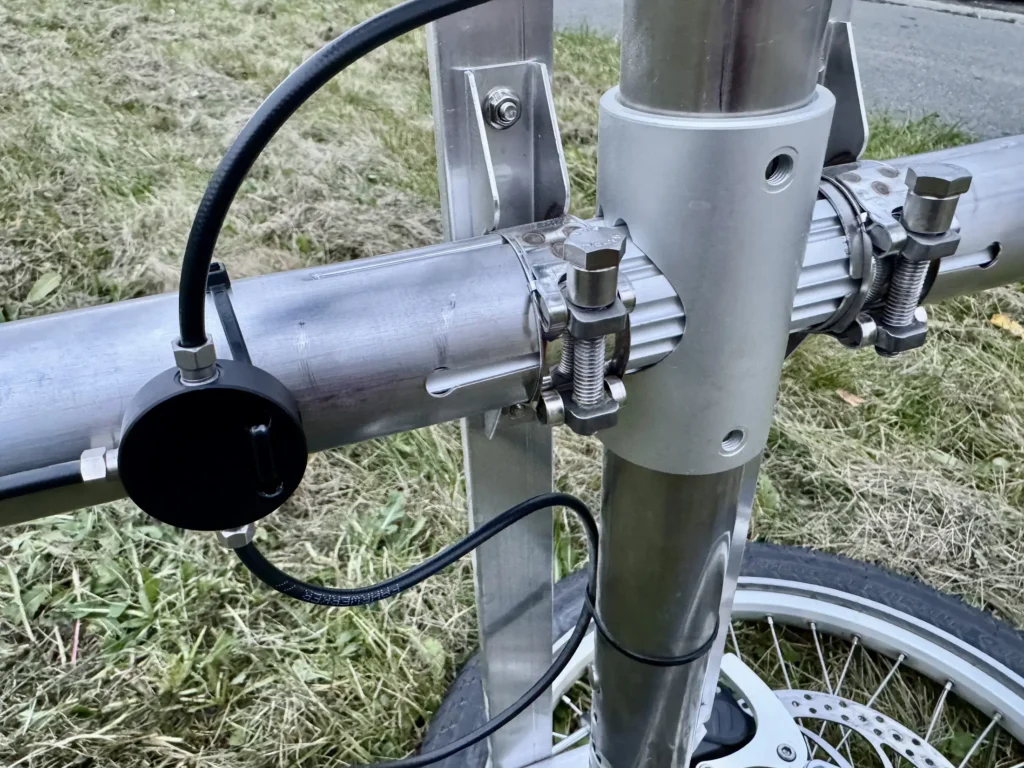
The brakes, which are one of the optional accessories for Aidoo trailers, are paired hydraulic disc brakes, and their hose runs to a large additional brake lever mounted on a short tube directly on your handlebars. Sounds a bit impractical when detaching the trailer, right? Not at all! The hose has a quick coupler with dust caps that works perfectly, and disconnecting the trailer is very quick. There was no fluid leakage or air entering the system during our testing. Even when fully loaded, the trailer’s weight was relatively low, so I used the trailer brakes mostly as backup—but it was definitely nice to have them.
Overall, the experience with the Aidoo trailer was excellent, but all those clever features not only cost money—they also add weight. I still use a non-electric bike on my tours, and a trailer whose weight significantly exceeded 20 kg / 44 lbs was simply too heavy. Without a motor, I wouldn’t choose all those extras and would rather go for a lighter version. But with an electric motor, it’s a completely different story. The increased weight only slightly shortens your overall range, and you can easily enjoy all the comfort these features bring. And that’s the direction we went this year. Last year, we chose a rather hilly route, and with two trailers and non-electric bikes, we didn’t really enjoy our cycling vacation. I openly admit it was quite a slog. That’s why we decided to slightly change our vehicle lineup.
Building a Custom Extended Aidoo Base Carrier
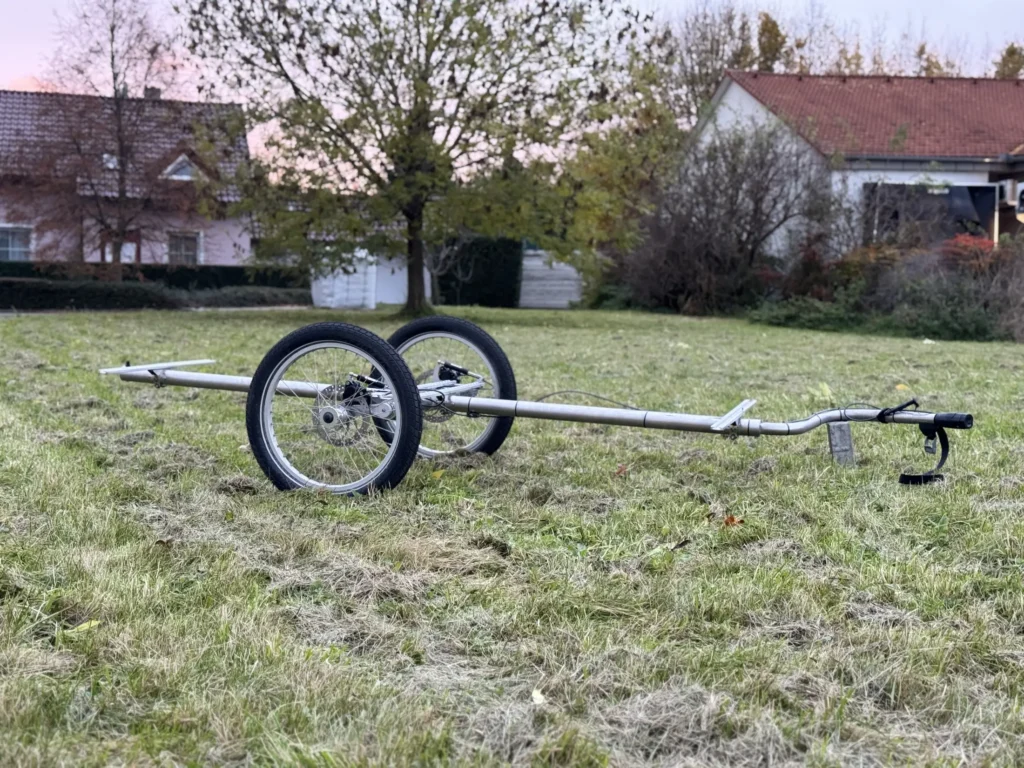
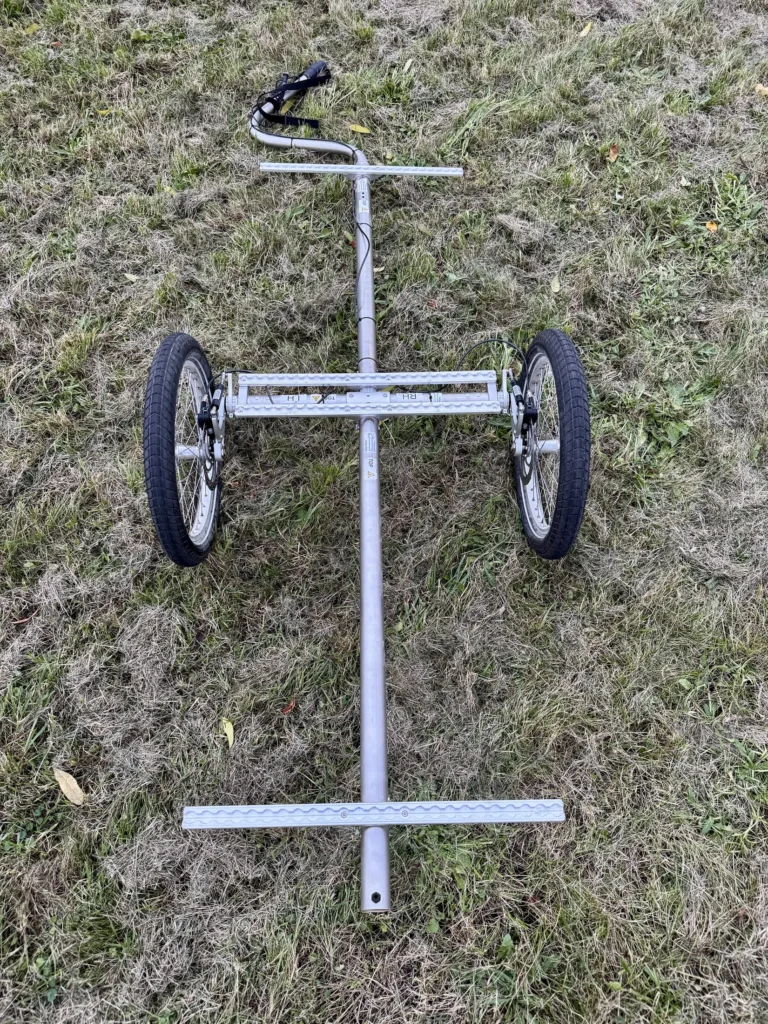
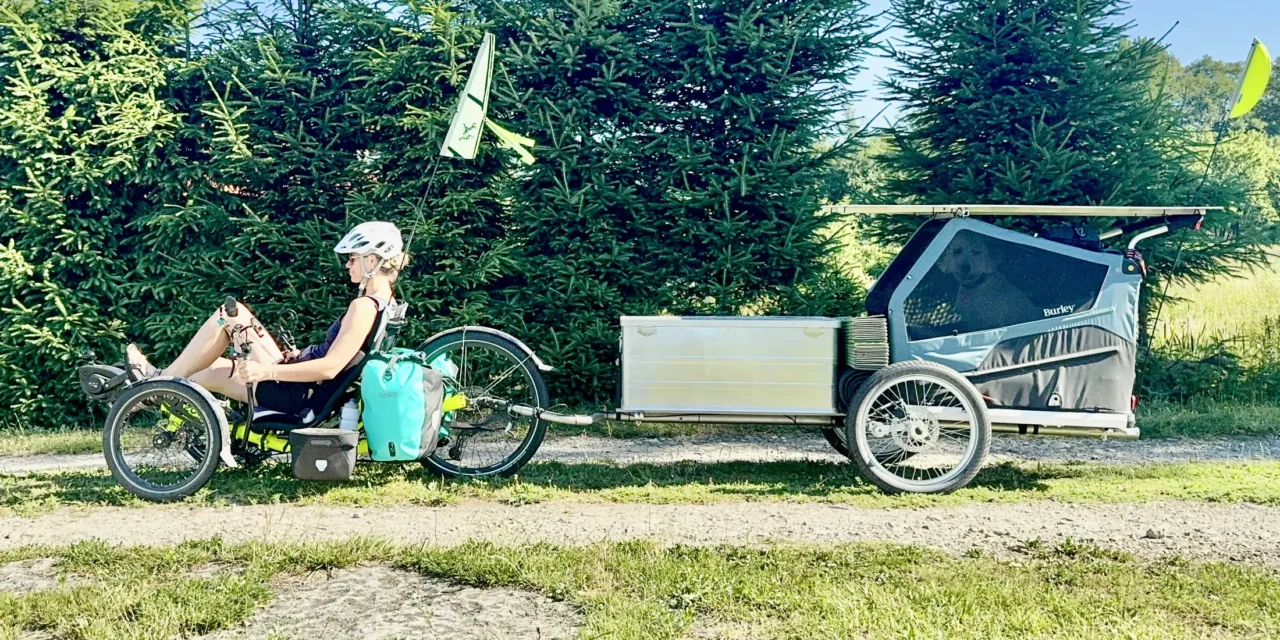
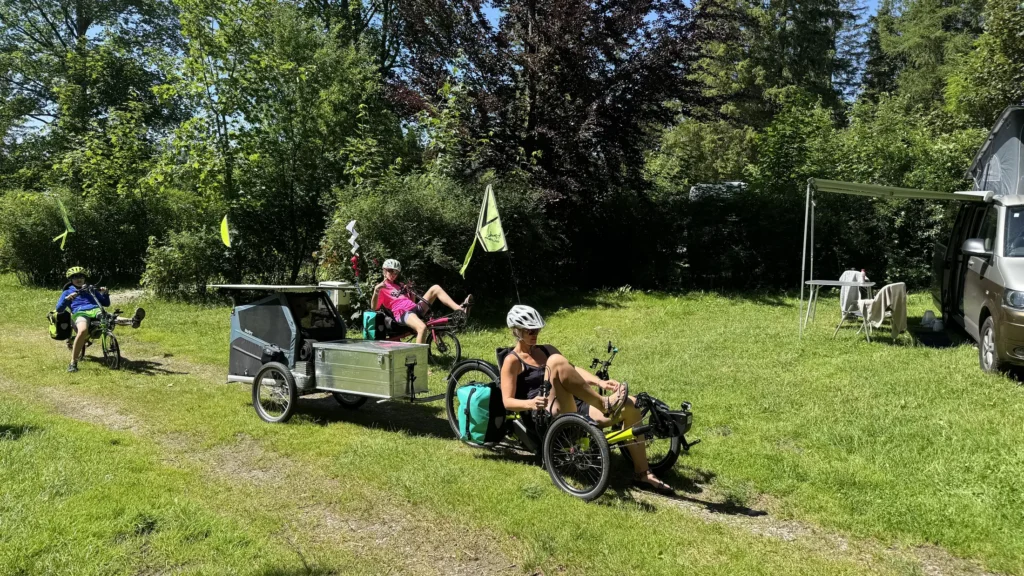
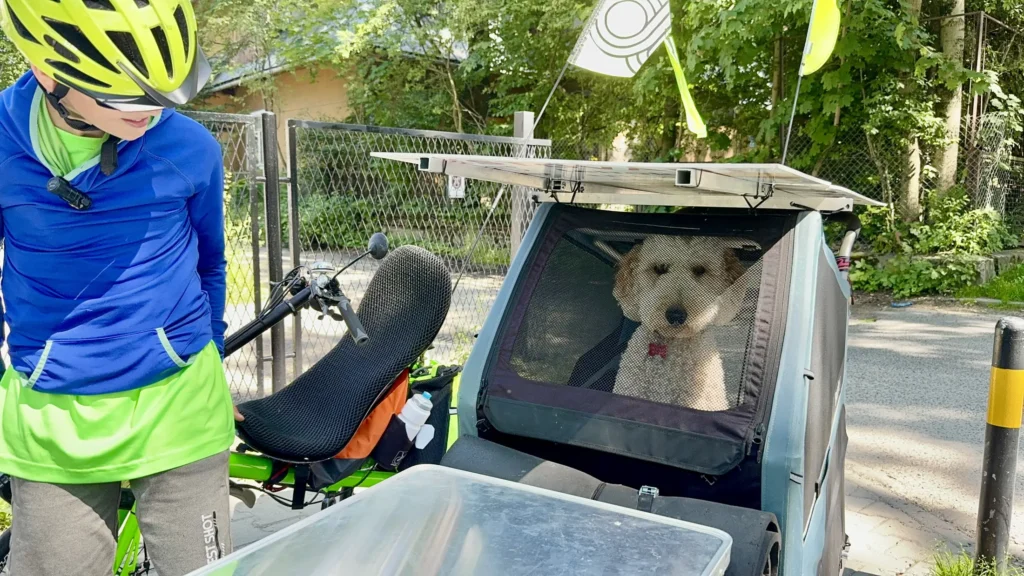
I continued to ride a non-electric recumbent with the kids, but Eliška got an AZUB Ti-FLY 26 electric trike with a Bosch Performance CX motor. The plan was to use the motor’s power so that Eliška would carry the extra load as well as our labradoodle Abbie. For that, I needed a really large trailer. Naturally, the choice fell on Aidoo. They were very accommodating and built a Base Carrier for us—the basic frame, but extended to meet our needs. It came, of course, with suspension and hydraulic brakes. The trailer arrived in a relatively small box, and I assembled it quite easily and quickly. It would have been nice to have the crossbars movable along the main frame tube, but the overall design of the trailer is very well thought out and doesn’t allow this adjustability by nature. Still, it wasn’t a problem: I mounted both a Burley Bark Ranger XL trailer (without wheels and tow bar) and the aluminum box from my previous project onto two longitudinal profiles using hose clamps and bolts.
The trailer was indeed quite long, but still relatively easy to handle, and thanks to the suspension it didn’t significantly affect the trike’s steering. Eliška handled the ride with it easily. Even Abbie seemed more comfortable in it than she had been a year earlier in the non-suspended Burley Bark Ranger. Overall, our team came together nicely. We were faster, everyone was more satisfied, and the climbs weren’t nearly as tiring. In the end, Eliška with the e-trike was even a little slower than the non-electric rest of us. She was simply more cautious with the trailer and the dog inside, riding more carefully over bigger bumps than we did.
It must also be said that every other day, a situation came up that had to be “dealt with.” An obstacle appeared that couldn’t simply be ridden over, and the trike-trailer setup had to be pushed through or even carried. Some of these situations we brought upon ourselves and were aware of in advance, like a tiny ferry where we had to load the bikes, while others could have been avoided with more careful planning. But even so, I wouldn’t change a thing. It was an excellent setup.
And not just this one. The Aidoo Base Carrier can be used for many other projects and combinations—it all depends on your needs and imagination how you decide to use it. Definitely recommended!